Electrical consumption

0 %

less energy consumed

100 Amp

Maximum current consumed on service batteries

A motor twice as efficient results in half the energy consumption

(in comparison to conventional 12V motors)

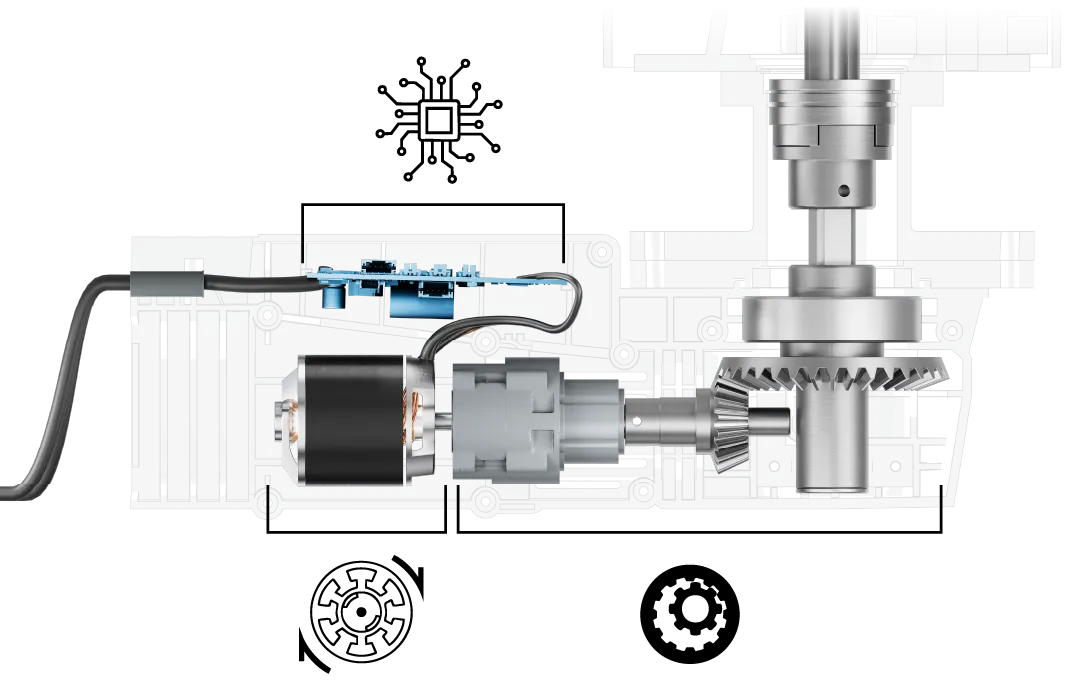
Advanced electronic board

It fully controls the Brushless motor, regulating the current to the motor based on the required torque and ensuring current commutation inside the motor to control its speed. It also stops the motor when the tension limit is reached.

1250W Brushless Outrunner Motor

The efficiency of Brushless motors is significantly higher than that of 12V brushed motors traditionally used in electric winches. Furthermore, the absence of brushes minimizes mechanical wear, significantly extending the motor's lifespan.

Gearbox and angular reducer

The combination of a gearbox and an angular reducer exceeds in efficiency conventional worm gear systems.

Resulting energy efficiency : 65%

This represents an energy efficiency twice as high as that of traditional 12V motors, which have an efficiency of only 35%. Consequently, it is 50% of energy saved and available for other uses onboard.

Electrical consumption by winch size to pull 1m at maximum load
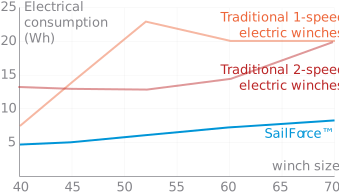
Data collected from public technical documentation SailForce™ data obtained from Ewincher tests
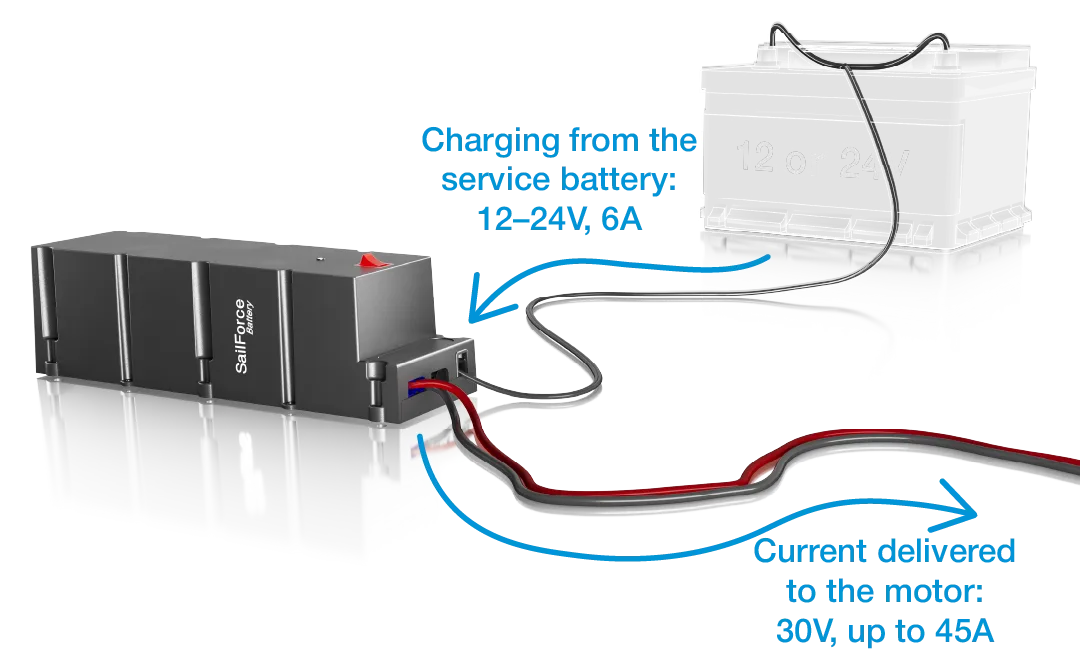
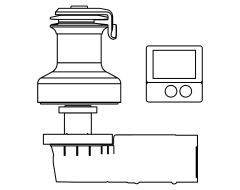
Motor powered by a 30V DC lithium battery

For optimal performance, the 12V DC supplied by the service batteries is not sufficient. That's why the SailForce™ electric winch is powered by its own 30V DC lithium battery that charges on the 12 or 24V DC, with a capacity of 144Wh, which is more than enough to power one or two electric winches.

The SailForce™ battery is included with the motor. It serves as a buffer battery, acting as an energy reservoir. When the electric winch is in use, it provides the winch with a powerful 30V current, with an intensity of up to 45A. When the winch is not in use, the lithium battery gradually recharges from the service batteries until it reaches its full charge, after which it no longer consumes energy from the service batteries.

It can be installed wherever you like in the cabin, up to a distance of 8 meters from the electric winch. All necessary cables are provided.

Preserves the service battery

The service batteries are typically designed for onboard equipment such as lighting or refrigeration, which rarely consume more than 6 amps. Therefore, these batteries are not suitable for the significant discharges required by an electric winch. The SailForce battery never consumes more than 6 amps, a consumption rate that may be comparable to that of the onboard refrigerator for a few minutes

No need for additional service battery

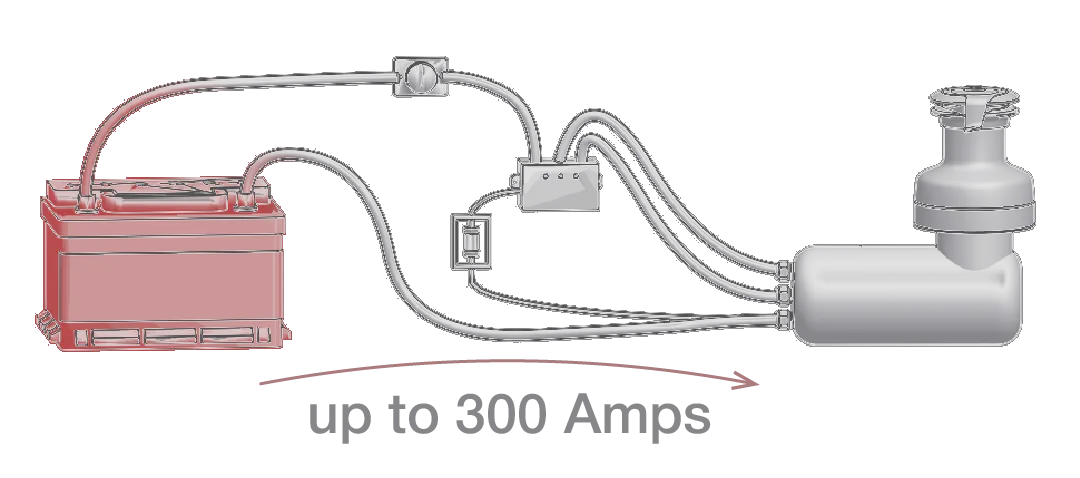
Wear on the service batteries caused by traditional 12V electric winches with brushed motors.

These motors are directly connected to the boat's service batteries, without an intermediate buffer battery.

They draw very high-intensity currents, reaching up to 200 or even 300 amps in some cases. In addition to wasting energy onboard, these high currents have a significant impact on the longevity of the service batteries.

No products available yet

Stay tuned! More products will be shown here as they are added.