See prices



LOCK / UNLOCK
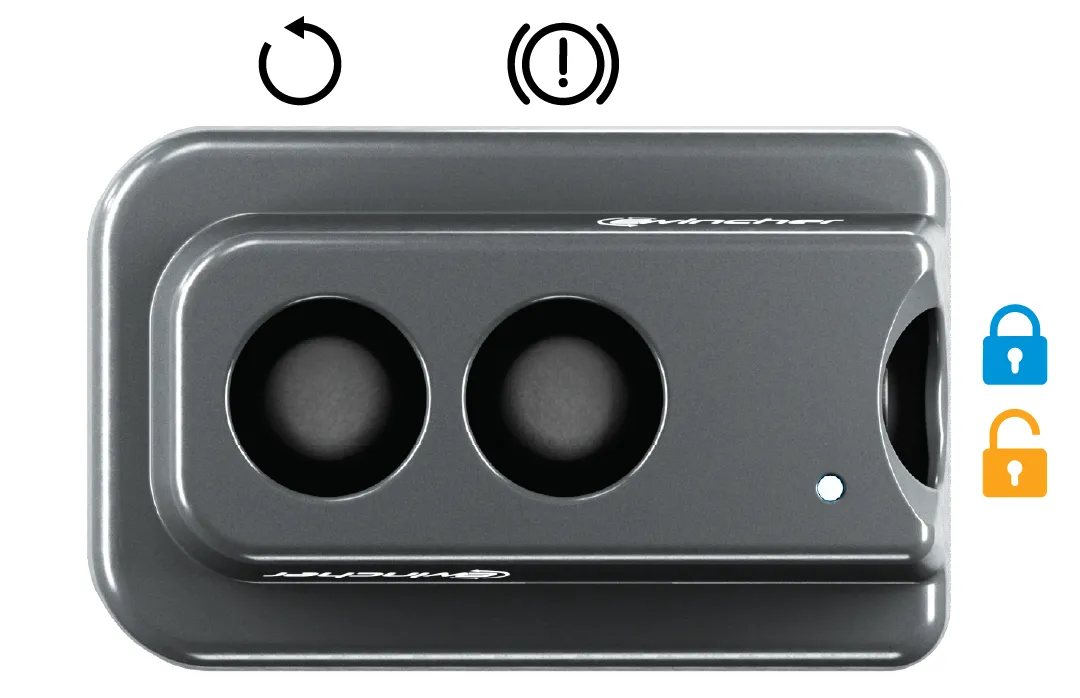
A ratchet clutch ensures the mandrel is locked when at rest (indicated by a blue LED), preventing the mainsail from being hoisted. To hoist or furl the mainsail, or to take a reef, unlock the system (orange LED). When reefing, lock the mandrel before tensioning the halyard.

FURL
Unique feature : a variable furling speed allows you to adjust furling speed from 6 up to 30 RPM: the harder you press, the faster it furls.

BRAKE
A proportional braking system lets you slow down the unfurling of the main sail : the harder you press, the greater the braking force. Crucial when a gust of wind causes the sail to unfurl too quickly while hoisting the main sail.

TENSION LIMITER
A tension limiter protects the sail during furling by preventing it from being rolled in under excessive tension. If the tension exceeds the set limit, the motor automatically stops.

CENTRAL CONTROL
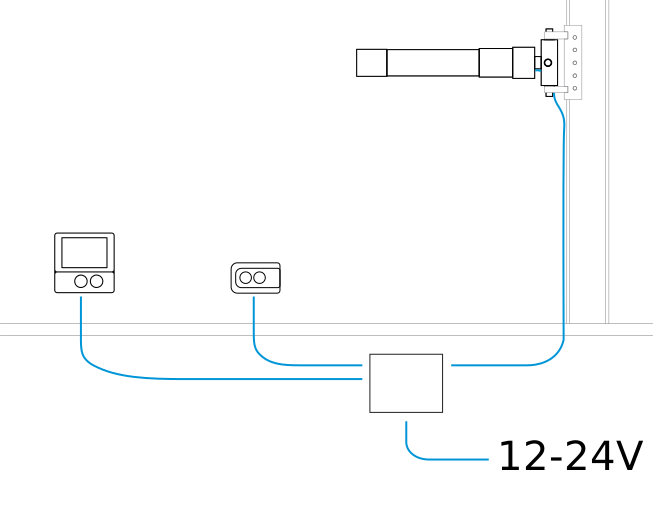
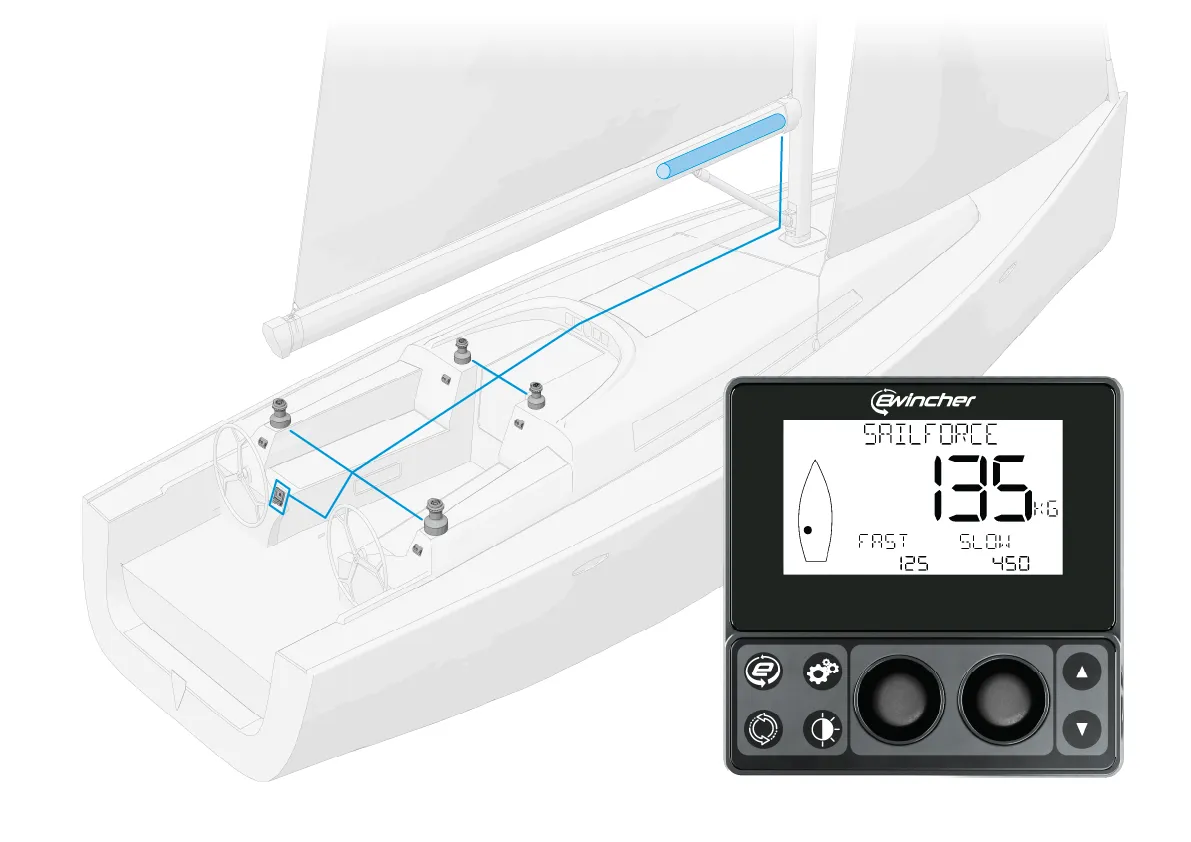
A secondary control unit can be installed near the helm, enabling control of both the boom furler motor and all SailForce™ electric winches onboard.
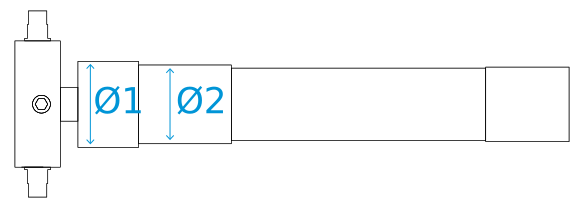
Mandrel external Ø1
120mm
Mandrel Ø2
110mm
Motor power
880W
Maximum furling torque
250Nm
Variable speed range :
Maximum
30 rpm
Minimum
6 rpm
Motor total weight*.The mandrel is available in two material options :
Stainless steel
24.2 kg
Titanium
21.8kg
Maximum working load
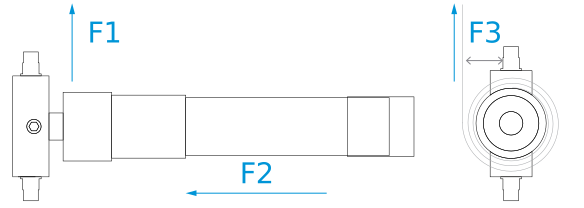
F1 - Vertical pull*
3.0 tons
F2 - Horizontal pull*
2.5 tons
F3 - Reefed sail vertical pull**
3.0 tons
**calculated with 200mm intermediate Ø